


The workplace no longer serves the same purpose it did a few years ago. More than just a place to work, it has become a space for collaboration, connection, creativity, and sharing. For many organizations, the challenge is no longer simply to provide functional workstations, but to design environments where employees genuinely want to return.
But what makes a space enjoyable to experience? Why do some offices immediately make us feel comfortable, while others feel cold or impersonal?
The answer does not rely on a single element. It is built through a multitude of design decisions that influence, often unconsciously, the way we experience a space.
Our brain perceives a space before we are even aware of it
Before we even sit down at our workstation, our brain has already begun interpreting the environment around us. Light, materials, textures, sounds, and colours are processed within fractions of a second.
Research in environmental psychology shows that these initial stimuli influence our perception of a space, our level of comfort, and our emotional state. This unconscious first impression helps determine whether a place feels welcoming, inspiring, or reassuring.
Designing a workplace is therefore about much more than meeting functional needs: it is about creating an experience.
1. Colours set the tone
Colour is often considered the finishing touch of a project. In reality, it is one of its main guiding elements. When thoughtfully selected, it supports an organization’s identity, creates an atmosphere, and influences how occupants experience a space.
It is not about applying a universal formula or simply following current trends. A successful colour palette is, above all, one that conveys a clear intention.
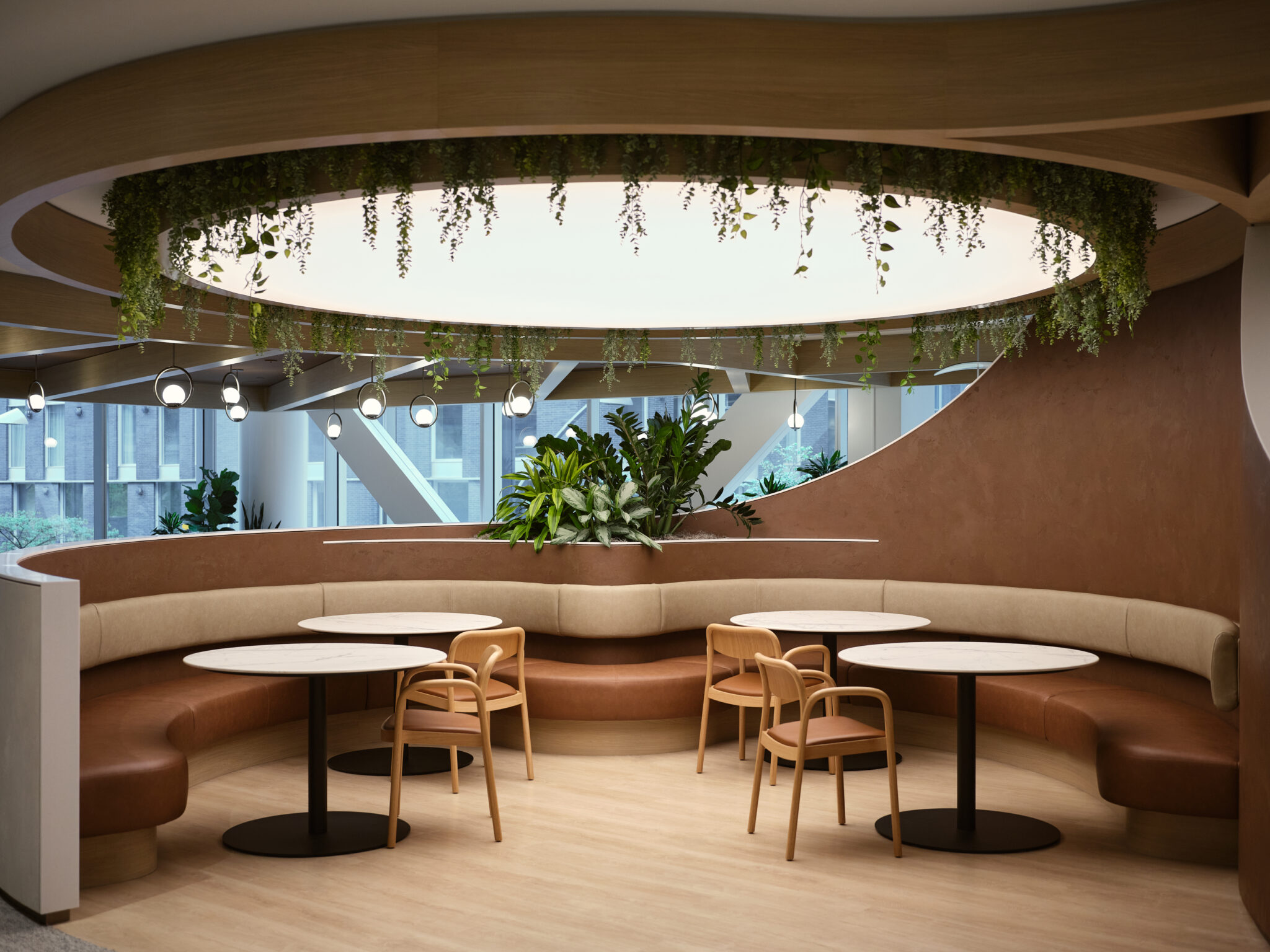
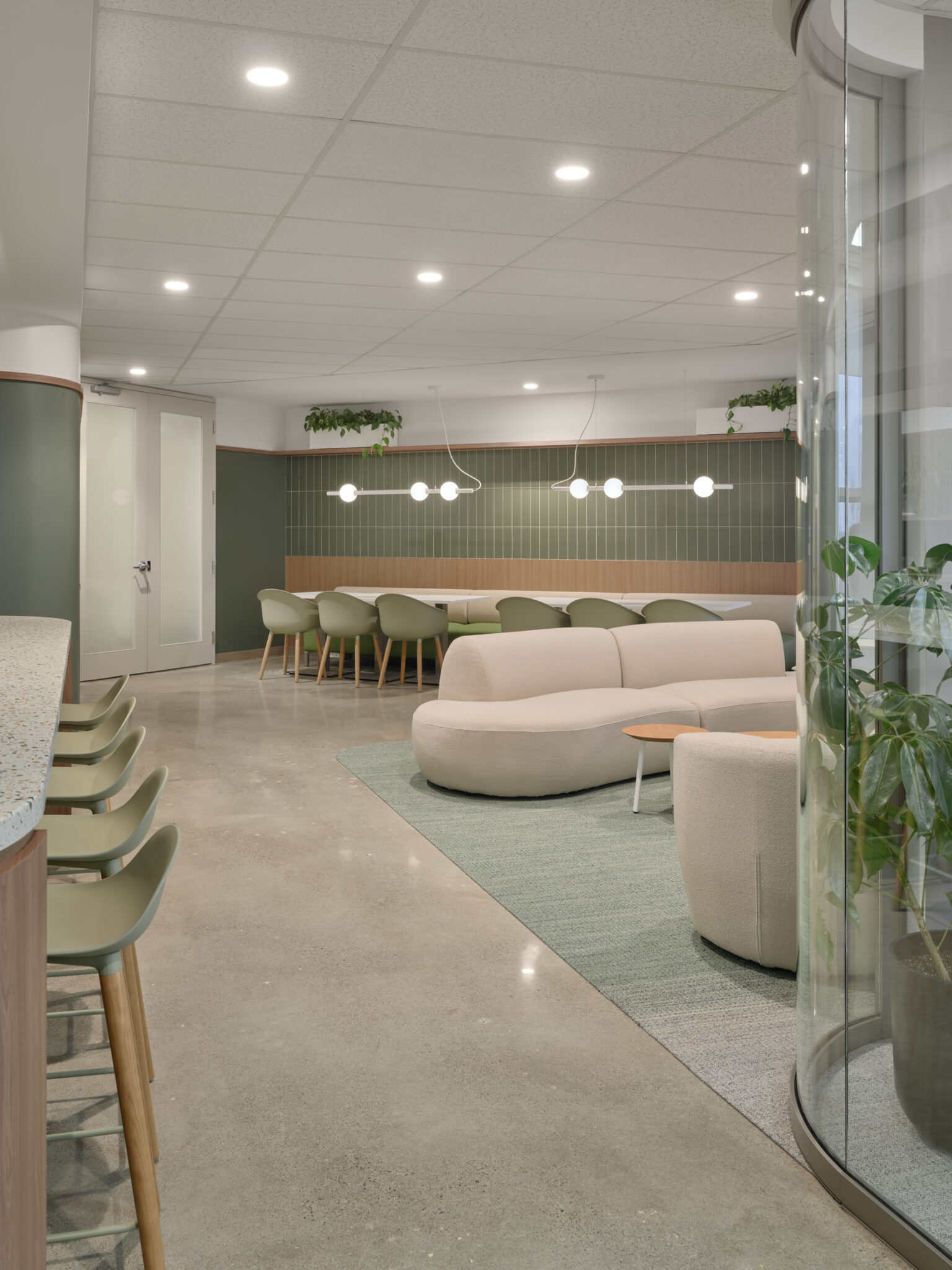
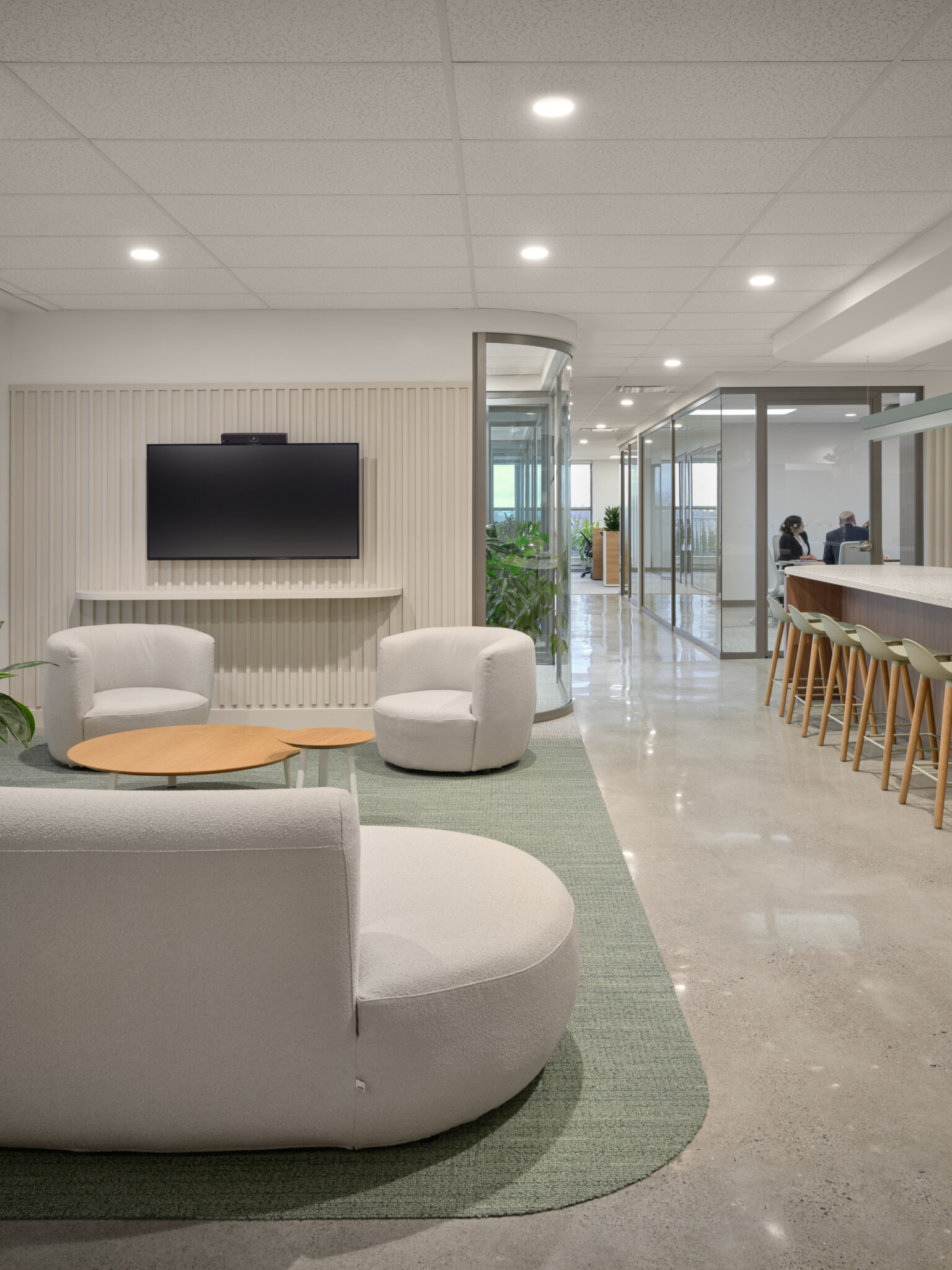
This reflection guided the design of AQRCB’s new head office. Inspired by the atmosphere of third-wave cafés, the palette combines shades of brown and green to reflect the organization’s values of sustainability and community, while creating a warm and natural environment.
2. Light reveals the full potential of a space
Light is one of the elements that most strongly influences our perception of an environment. A poorly lit space can quickly feel cold, tiring, or unwelcoming, even if it is well designed. When carefully considered, lighting enhances materials, improves visual comfort, and reveals colours differently throughout the day.
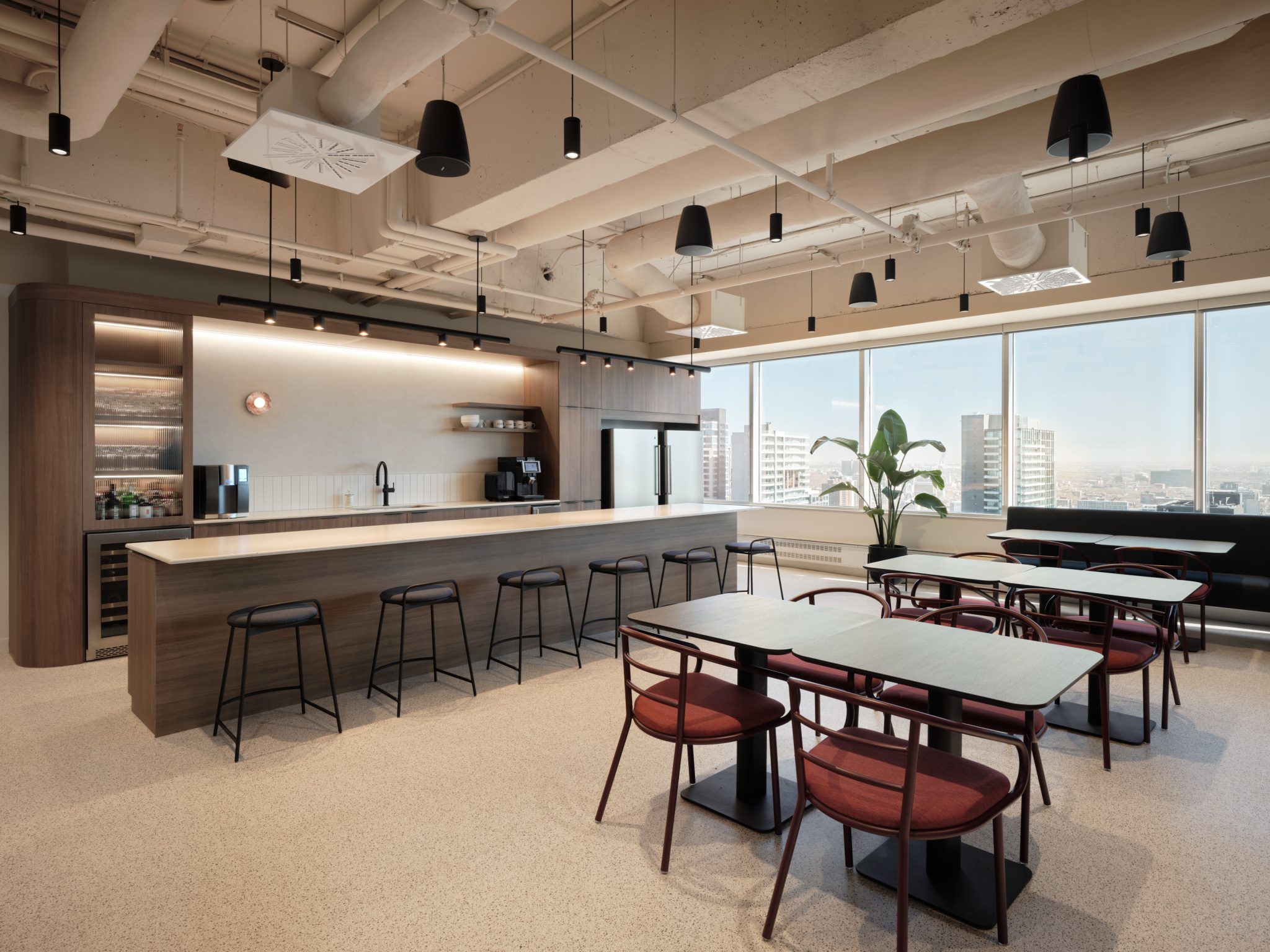
At LCM Avocats, natural light has become a key design element. Neutral colors and materials were chosen with restraint to highlight the panoramic view. The result is a bright, elegant, and soothing environment where the interior architecture blends naturally with the outdoor landscape.
3. Materials give a space its character
The choice of materials is not based solely on aesthetic or technical considerations. Materials help shape the user experience, create an atmosphere, and communicate an organization’s values. The use of local materials, for example, can reflect a commitment to sustainability while supporting the regional economy.
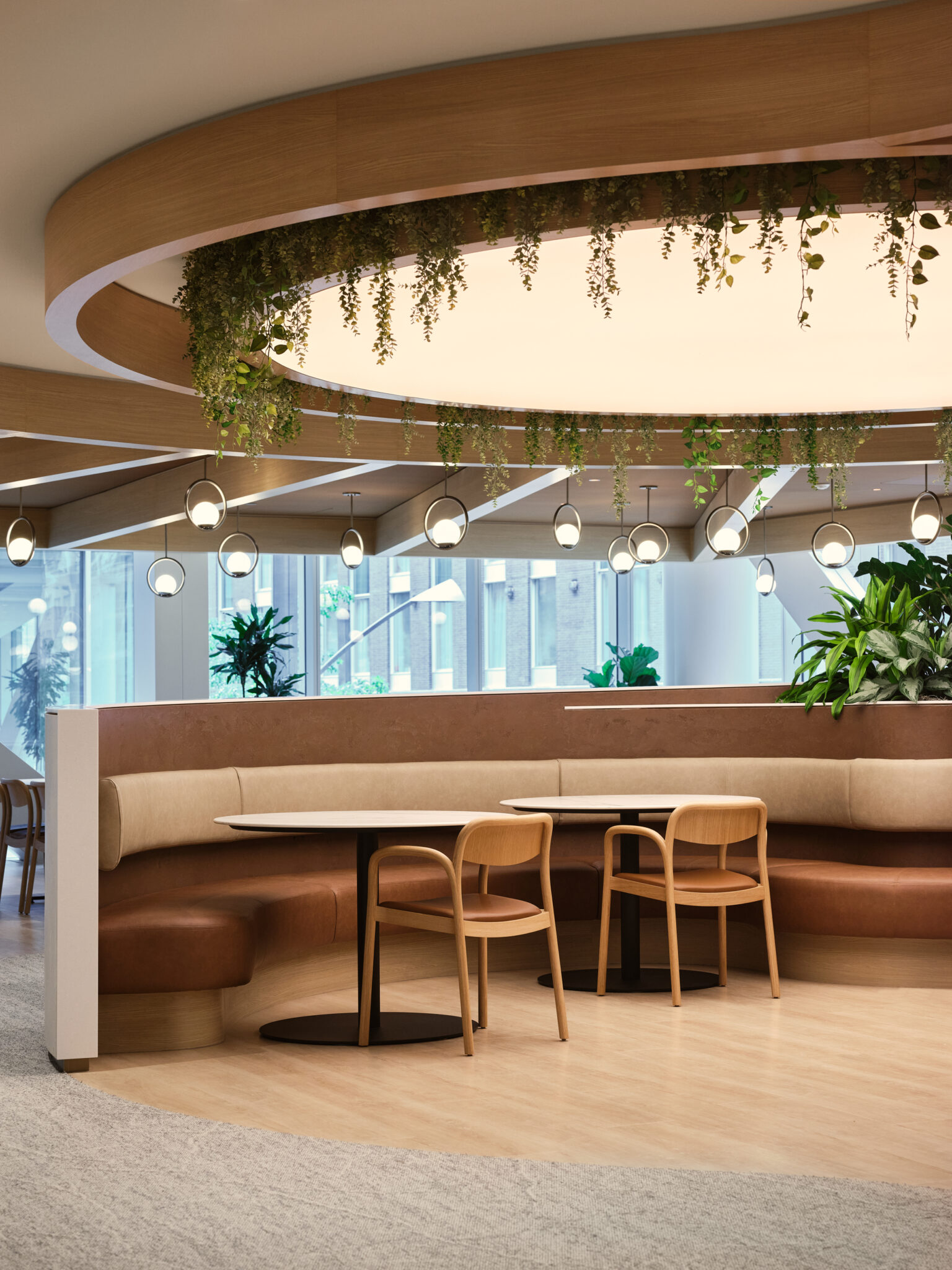
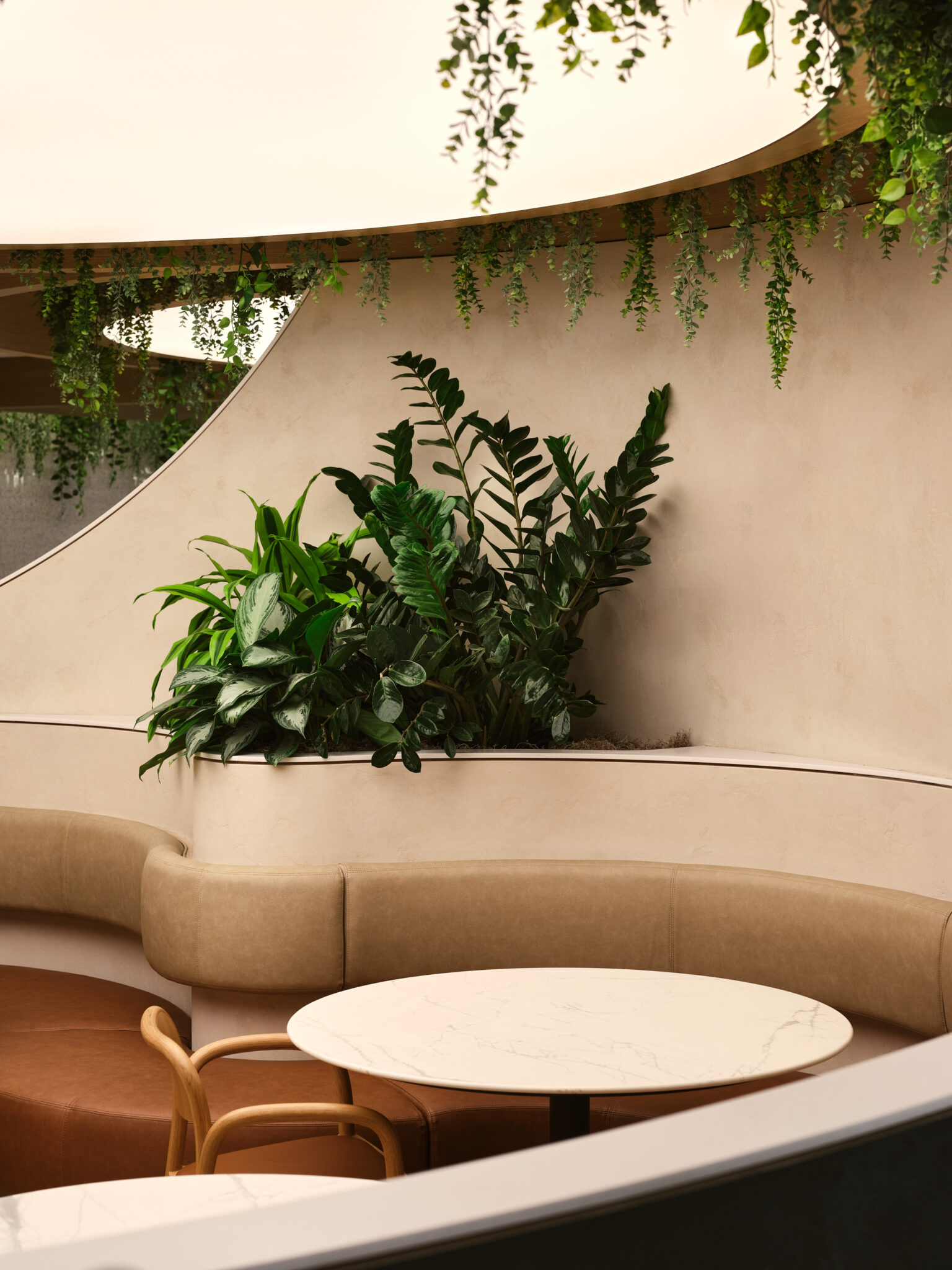
In the coffee lounge we designed for one of our clients, this philosophy guided our decisions. Local materials, wood, curved benches and abundant greenery were brought together to create a warm and welcoming space inspired by nature. This environment was designed to encourage spontaneous interactions, stimulate creativity, and strengthen bonds among teams.
4. Space planning supports the way people work
An effective workspace isn’t just about how it looks. It must accommodate different ways of working.
Today’s offices host a variety of activities: informal meetings, individual focus, collaborative work, virtual calls, and breaks. Each of these situations requires a suitable environment.
The designer’s role is therefore to design spaces that naturally accommodate these different uses, by creating smooth transitions between areas and facilitating interactions.
At BDC Boucherville’s office, the layout was structured around this diversity of needs. Open workstations encourage collaboration, while individual booths provide spaces for focus and quiet work. Several meeting rooms support daily teamwork, complemented by a large flexible room that can adapt to different needs. Each space serves a specific purpose while contributing to a seamless and cohesive experience.
Every project begins with an intention
The needs of a clinic, a corporate headquarters, or an educational institution are not the same. The best decisions are those that take into account the users, the organization’s culture, and the experience we aim to create.
At VAD, our design decisions are rooted in this approach. Color, light, materials, and layout are never considered in isolation; they work together to bring coherent and sustainable spaces to life.
Why do certain spaces make us want to come back?
An attractive office is more than just designer furniture or a trendy color scheme. What really makes an impression on users is the experience they have on a daily basis.
When an environment is thoughtfully designed, it becomes more than just a workplace. It fosters interaction, strengthens a sense of belonging, and reflects the organization’s identity. People don’t return to the office just because they have to; they return because they feel comfortable there.